Writing My Life

Now and Then


2 Comments

… maybe it’s wise to do some research before believing political emails …

I am not a registered Republican because I consider myself an independent. On my FaceBook profile, I post my politics as “conservatively liberal” – which I know bugs some friends and family members. Most of the time I am rather disgusted with the whole political realm on “both sides of the aisle.”

While there is much to complain about, I worry about the MISinformation that is spread far and wide via mass email messages. So often what I receive is downright frightening, and I have a hard time believing these scare tactics guised as wake-up calls. Because many believe the press to be the handiwork of liberals, I suppose ultra-conservatives feel they must spread their views through nasty talk show hosts and email messages.

The first thing I look for when I receive such email messages is the source of the information – who is authoring, publishing, and sending this? So often that important detail is missing, but I’ve also learned that when a source is cited, the information may have been manipulated and thus it is compromised. For example, excerpts from Lee Iaccoca’s book that is critical of some Republicans were “revised” so that Iaccoca’s words lam-blast Democrats. (It’s lengthy, so if you follow the link, read all the way down to the bottom to see how his thoughts were misrepresented.)

Next I look at content and what purpose it serves. If the information is overly biased, I am suspect. That’s when I go to sites like Snopes.com that investigates rumors, legends, scams, etc. While some may wonder if Snopes is credible, I researched their origins, practices, and investigations and learned enough to feel that they are what they claim to be: amateur folklorists who have built “one of the Internet’s most trusted authorities.”

Recently, my husband forwarded a message to me that claimed President Obama had removed the American flag from his press conferences, and that he had decorated the White House in a Mideastern decor. Before I checked this out, I wrote the following to G.E.

Maybe I am naive, but I just can’t bring myself to see a conspiracy behind every change. Maybe it’s a subtle way of reaching out to the millions of peace-loving Muslims throughout the world. Maybe this little act [of adding a Mideastern flavor to the furnishings] has sparked the pro-democracy rebellions throughout the middle east. Maybe the flag is just out of the range of the photo. Who knows?

Then I went to Snopes to see if I could find out more, and sure enough I did. While the email showed photos of several former presidents speaking before Old Glory along with a picture of President Obama on a flagless set, the Snopes’ research explained that many presidents have spoken to the nation and an American flag was not present. Not only did the article explain why that happens, it also featured photos of such occasions. Go HERE to learn more – if you want to.

Another message claimed that President Obama has created a policy declaring that military men cannot speak at faith-based meetings. First, Donna P. Parsons of Lancaster County School District’s Instructional Services supposedly authored the message. I work for a school district in the curriculum department, and I know I would be in big trouble if I sent out controversial information with my “work signature” attached to it.

Second, it was sent by a retired vice admiral, and so maybe Ms. Parsons just emailed the admiral who then forwarded it to the rest of the world. To check it out, I went to Snopes and entered “Sgt.1st Class Greg Stube,” the name of the Green Beret who was supposed to speak at a charitable event for Catch-a-Dream.

Not surprisingly, I learned that President Obama did not create the policy but rather the Department of Defense, and it has to do with speaking at charitable events not at faith-based public events or at churches. Again, if you want all the details, go HERE.

Don’t be mistaken, I do not support many of the decisions made by President Obama and the Democrats, but I do think we owe it to ourselves to validate information. Let us be an informed citizenry, not a duped one.

And now I will step down from my soap box. =)


6 Comments

… a back-handed compliment is better than no compliment at all … maybe; maybe not …

Formerly called “left-handed compliments,” the politically correct term is now “back-handed.” Because I birthed left-handed children, I respect this change in terminology. Nevertheless, I feel I need to define the idiom and explain why I prefer “back-handed.”  The Phrase Finder’s definition is as follows:

A left-handed (or back-handed) compliment is an insult concealed in an apparent compliment and thus is the reverse of a real compliment, as left is the reverse of right. The left side has long been associated with wrongness.

Aside from all of the Christian superstitions about “sinister” left-handed” people, there are other reasons for apprehensions about offerings from one’s left hand. In many areas of what is called “the developing world”, where people eat without utensils, they use only their right hands, since they use their left hands for “toilet-related” functions. Apparently, it is still a tradition in some areas.

Well, that last paragraph is rather gross, but I remember hearing that explanation as a reason why we don’t shake left hands. With the “wash-your-hands”campaign blitz going on in rest rooms across the nation, I hope this isn’t an issue anymore. But back to the topic at hand.

I LOVE to give and receive compliments because they cheer up  people. It’s when we base our self esteem upon receiving or not receiving plaudits that praise becomes problematic for the hearer. But what about those times when the giver’s motivation includes an additional message that might not be so kind? What EXACTLY are those statements? And how do we pick up on those implications? More importantly, how do we feel about them?

Giver’s Intentions: I don’t really think we can “guess” why individuals share compliments that leave us wondering what they really meant unless we know that person fairly well. For example, my hair dresser often chats about her grandma who looks at her straight hair and says, “I just love your hair when you wear it curly.”

Jessica knows her grandma well. She knows how much the elderly woman dislikes straight hair because she thinks it looks stringy or slutty or both. She knows her grandma is outspoken, but she also knows Grandma loves her. So Jessica just laughs off the remark or says, “I really like it this way, too, Grandma.”

Sometimes we want to give our friend or family member some “helpful” advice, but we don’t want to hurt their feelings. We think embedding the suggestion in some sort of “compliment” will soften the words. But that rarely works. Our dear ones can usually see right through the ploys, and the whole idea blows up in our faces.

There are also times when we’ve experienced a misunderstanding with someone in our lives, and we may be working through the disagreement. We want to improve the situation, and so we make an effort to be kinder and to share our appreciation through sincere compliments. Because of the hurt feelings, our friend or family member may be suspicious of our comments, but I think we can show our sincerity by sharing heart-felt thoughts.

Examples of back-handed compliments: While most of us can recognize one when we hear it, here are a few common examples ~

  • “You look nice today.” (Inferring that other days you DON’T?)
  • “You look so skinny in that dress.” (Even though you aren’t.)
  • “You’re smarter than you look.” (What does a smart person look like???)
  • “I can’t believe how cute this baby is.” (Why? Because the parents are so ugly? because babies are ugly? Hm?)
  • “You think like a man.” (Because women’s thinking is so flawed? Or maybe that is an EXPLICIT insult!)

Picking up on the intended meaning: We sometimes decide a person is actually slamming us with a disguised compliment by the “way” he or she says it. If the tone seems a little too saccharine or condescending, we become suspect, especially if a false smile accompanies the statement.

Body language, as well as facial expressions, often tells us the giver is insincere, too. If the body seems tense, we assume that anger or even jealousy lies behind the words.

The preciseness of the language might suggest the individual has long thought about what to say and how to say it, and has just been waiting for the right opportunity to pounce.

What about those times when the comment is obviously backhanded, but no other “signals” accompany the words. Then, I think, the person has NOT thought about what he or she is going to say or how it will sound. They just spit out their opinion not realizing that it might come across as insulting.

Should we become offended in such circumstances? Probably not. It goes back to how well we know that person. Are they ALWAYS saying things like that? Do you have a history of not getting along with said person? Because of that history, are these asteisms subconscious attacks upon us? In reality, I DON’T think so. These people are just a little oblivious. Or maybe a lot oblivious.

How to react to backhanded compliments:  Can’t we just laugh them off most of the time? Naive as I might be, I believe most people are not so conniving as to work on ripping on people in this way. After all, it takes a clever person to come up with a clever backhanded compliment on the spur of the moment. That’s why most of the examples I shared are pretty cliche’.

When we know the person well, we sometimes joke about the compliment – “I guess I look pretty shabby most days then.” And our colleague, friend, mother, sister usually blushes and says, “Oh, I didn’t mean it that way,” and they really didn’t.

Last night a friend of mine that I’ve gotten to know over the past year told me how nice I looked. Then she followed the compliment with questions:

Friend: What is different? You got your hair cut. (I had.) But there’s something else. Is your hair lighter?

Me: Yes, sort of. I got highlights put it in.

Friend: That’s it!!! I like it!!! It’s so much softer.

Me (thinking to myself): So you think the brunette color made me look like a hardened old woman?

Although I thought the grumpy comeback, I knew she didn’t mean it that way. She’s one of the sweetest, kindest women I know. The last thing she would do is insult me – I am sure of it. And so I said, “Thanks. Glad you like it.”

To wrap up this text that grew and grew in length, I don’t want anyone to become paranoid about sharing compliments. It is a wonderful thing to do. If you see something you like, say so. That person will usually (like 99% of the time) LOVE it and will not take offense to how it was offered. I really don’t think we tell each other enough how much we enjoy her company or how inspiring he is to to us or how lovely she is. Such sentiments can brighten moods and make our little worlds better places, don’t you think? I’d love to hear your thoughts on this subject.


2 Comments

… word clouds ~ may be a spin on love stories …

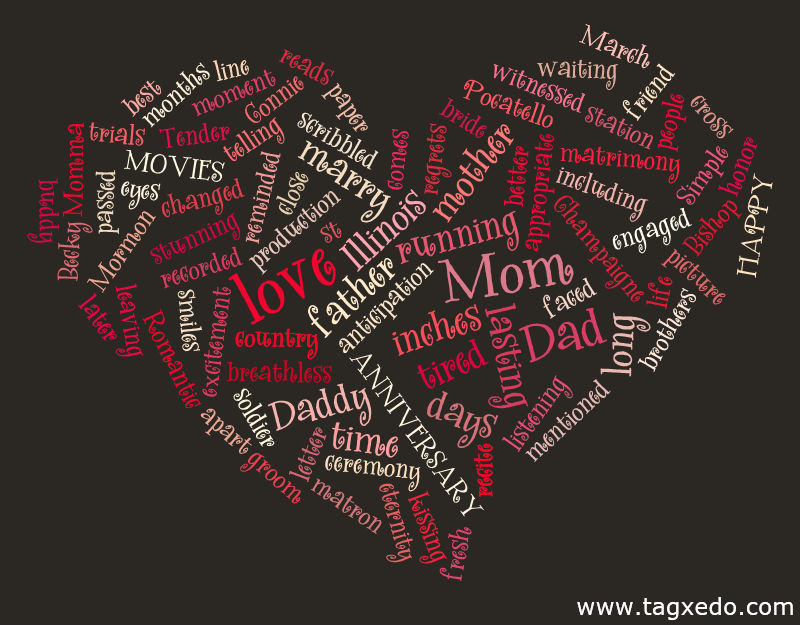
While looking back through some of my earlier posts last night, I re-read my tribute to my mom and dad on the 65th anniversary of the day they wed. Nearly a year has passed and so I thought of another way to honor their love story. Hope you like it! 

P. S. Tagxedo is sort of like wordle.net but I like it better because you can “shape” your words. Most of my Wordle creations looked like potatoes; whereas Tagxedo shapes the story!!


1 Comment

… maybe the strangest geological label around – Mr. Big Rock, HooDoo u think u are? …

I’ve traveled a little bit in my near-63 years upon this beautiful earth, and I’ve seen some great sites, ranging from the Eiffel Tower in Paris AND Vegas to Washington’s AND Lincoln’s monuments. BUT I have NOT seen many famous NATURAL wonders. I have ventured into Yellowstone Park and watched Old Faithful do her thing, and I have marveled at the Tetons  in Jackson Hole, Wyoming. EVERY day I ooh and ahh over the Rockies right here in my backyard, but I had NEVER ventured south to visit what SHOULD be one of the TOP 10 natural wonders of the world.

Southern Utah is home to NUMEROUS red, salmon-pink, golden, and gray rock canyons. While I have seen pictures and postcards, calendars and magnets depicting these canyons, I had not visited any until this past spring break. It was time!

I chose Bryce Canyon as our destination because of a certain accommodation: Ruby’s Inn. For years, I had heard of the historical lodging place, and I wanted to stay there, regardless of the canyon it called home. So off we went on a cold, rainy April day.

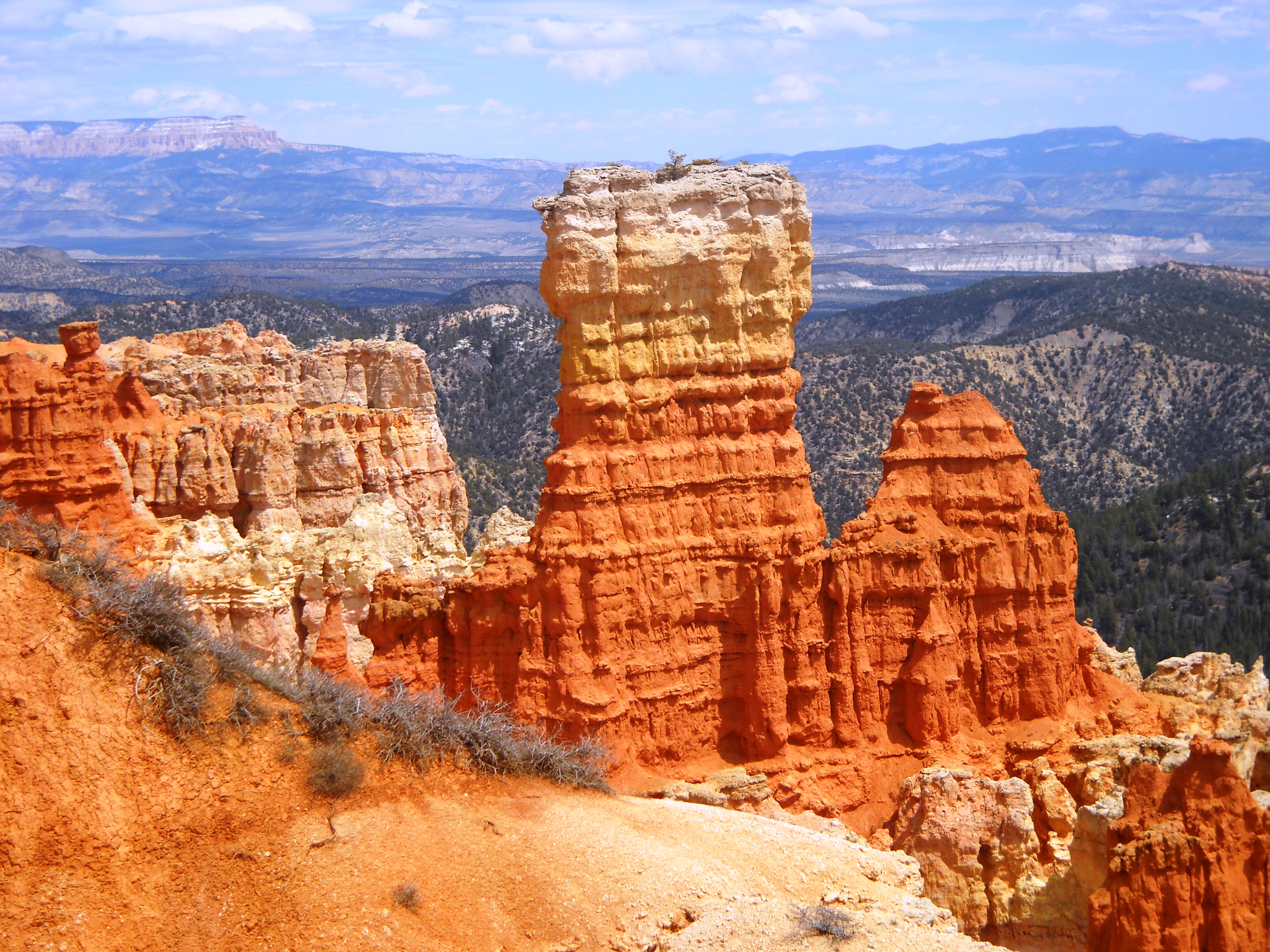
I love the learning that takes place on such ventures, and I will share more “fun facts” over the next few weeks, but I have to say that seeing these MORE than AMAZING formations up close and personal surpassed my expectations of breath-taking WOWness!

Yes, I shot this photo with my little red camera!

I became instantly curious. How were these “columns” created? Why are the rocks’ colors so intense? And my FAVORITE question of the hour: They are called WHAT? HOO DOOS? Who came up with THAT sophisticated, scientific-sounding name?

Although the Bryce National Park literature failed to explain the origin, and my personal research has not “conjured” up the answer, I have my own theory.

You see the native tribes of that area – the Paiutes – believed that the consummate trickster, Coyote, turned these “legend people” to stone. The rows upon rows of hoodoos look like lines of warriors, and I was, in fact, reminded of the terracotta army of the first Qin Dynasty.

HooDoos of China

Back to my theory. According to the always reliable Wikipedia, “the word hoodoo was first documented in American English in 1875.” Its definition is based upon trans-culture folk magic that involves potions, spells, and conjuration. Therefore it isn’t a far stretch to imagine that the Wily Coyote legend inspired the Official Geological Naming Committee to cleverly assign these majestic rock formations a “fun” label like HooDoo – “not to be confused with New Orleans voodoo or Haitian vodou.”

Unreal AND Surreal!


1 Comment

… may be LOW-TECH, but homemade Mother’s Day cards are still the best …

This past week I received an email from JibJab – the site where you grab some photos and lop the heads of friends and family and stick them on site’s videos or postcards for a hilarious effect. The site had all kinds of funny options customers could send their moms, and I will probably send one to my mom.

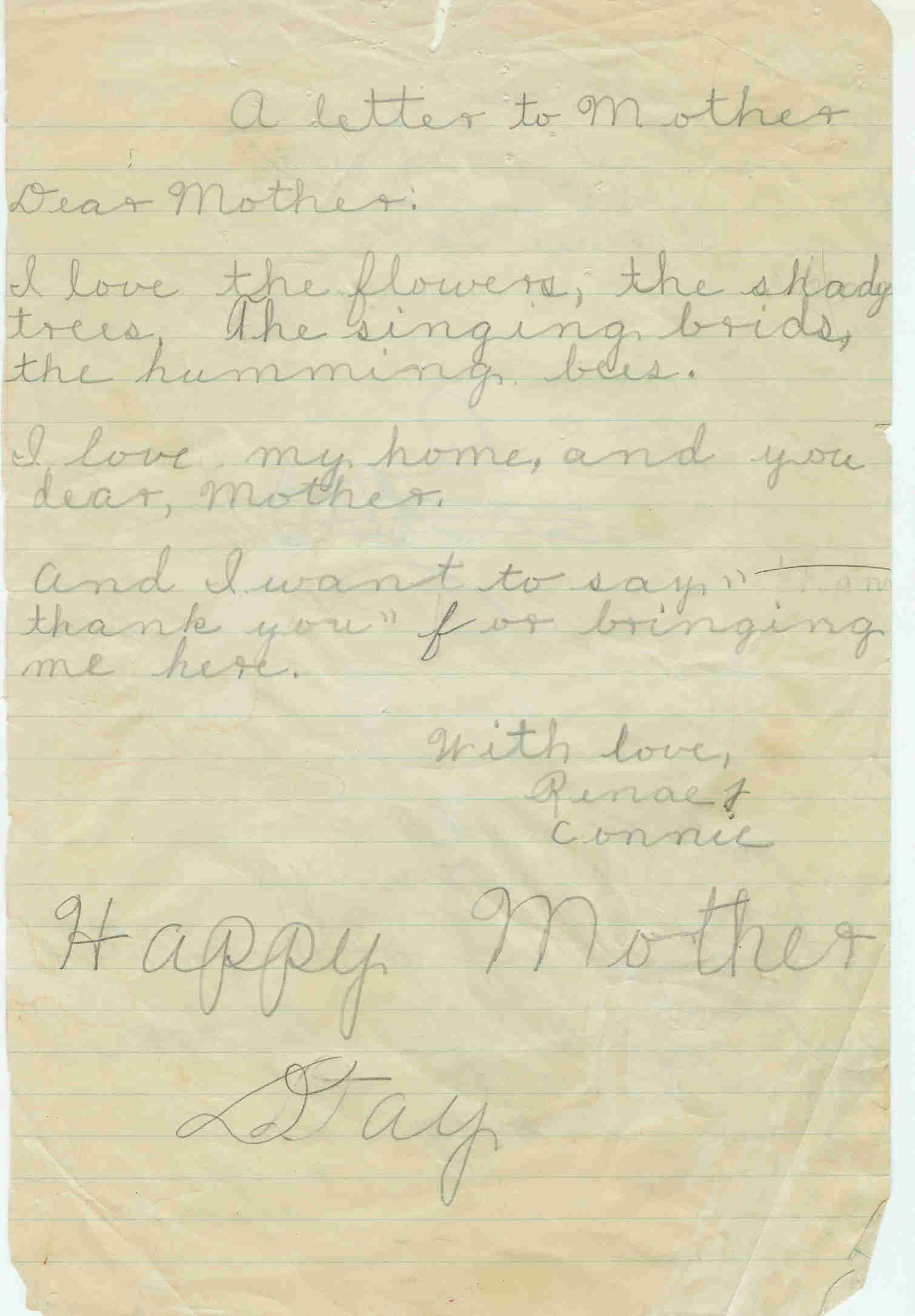
However, I couldn’t help but think about cards I used to make for her. Here are a couple I created for Mom in 1956 and 1957 or ’58. You will notice the “clip art” is either non-existent or lacking and Spellcheck failed to correct a few words, but the sentiments – strange as they might be came from my 7 and 8 year-old-heart.  Well, maybe I “copied and pasted” one or two lines for the first poem.

Connie and I probably created this poem in 1958 when I was in third grade. I was still writing "r's" like Mrs. Quidor and the Palmer method taught me.

I went to a little more effort to create this card when I was in 4th grade in 1959. The front of the card is on the left and the inside verse is on the right. I even included a little Hallmark logo on the back to make it official! After all, didn’t card companies create Mother’s Day? (By the way, neither of these creations were school assignments!)

Because of the drawing, complete with halo AND horns, as well as the guilt-ridden verse, I have to guess that I must have gotten into some big trouble a day or two before Mother’s Day!

My mother NEVER hurt my EAR, but hey, it rhymed with DEAR!

Notice the "horns" on the anGLE's head holding up her halo. Interesting.


1 Comment

… maybe you’re wondering why I’m posting EVERY day …

And maybe you’re wondering why every title includes the “maybe” word.

Well, wonder NO more.

Reason #1: Not exactly like National Novel Writing Month (NaNoWriMo), the “knock-off” site, NaBloPoMo (National Blog Posting Month) promotes posting every day. While November is the BIG promo for NaBloPoMo, the organization does invite bloggers to respond to a different theme for every month.

This month, the theme is MAYBE, and for some unexplained reason, it struck a chord. I hated the word when I was a kid because it was a way my parents had of putting off a decision:

“Mom, can I sleep over at Diane’s?”

Maybe. We’ll see. Let me think about it.” (Three ways to say “maybe.”)

“Dad, can I sleep over at Diane’s?”

Maybe you should ask your mother.”

When I became a mom, however, my 4 boys soon learned that when Mom said “maybe,” it usually meant “yes.” But when Dad said “maybe,” it was a “no,” unless Mom could work her magic on him.

Reason #2. WordPress.com, my publishing platform of choice, is also sponsoring a post-a-day OR a post-a-week challenge. I opted for the weekly route because I WAS pretty good about posting that often. BUT life got crazy all around me, and I was lucky to publish every 10 days.

Now that things have calmed a teeny-tiny bit, I thought posting every day would get me back in the writing groove, and it has.

Reason #3: During my “I’m-too-busy-to-blog” weeks, dozens of writing ideas haunted me. WordPress sends me writing ideas every day, along with Plinky. But I don’t really need writing ideas as my life is crazy enough to generate topics that attack me from every direction. I realize, however, that if I don’t get them in print fast, I’ll forget. (I’ve been dying to post that PooParty blog!)

I also have dozens of pictures I want to share. April was a bit of a travel month, and so I know you are waiting with baited breath to see my Bryce Canyon and Albuquerque shots!

Reason #4: Blogging often builds up readership. While that isn’t the main reason I do this, it is still a thrill to learn that someone enjoyed what you had to say about something – even if the topic is poo.

Reason #5: I just love to reflect and to write. End of story.

Until tomorrow, rbs


2 Comments

… beginning of the end of the “war on terror”… maybe ….

Dear FUTURE Great and Great-Great Grandchildren,

Yesterday was one of those historic dates that you may read about in your history books in your online history class. You will interact with the text and learn that on May 1, 2011, nearly 10 years after September 11, 2001, the evil genius behind the Alqaeda attacks on the Twin Towers in New York City was FINALLY hunted down and killed.

 At first, as silly as this may seem, I felt like the Munchkins in the Wizard of Oz who sang, “Ding dong! the witch is dead; the witch old witch, the witch old witch. Ding dong! the wicked witch is dead.” But then I stopped myself. Like many Americans, I realized that it isn’t right to be excited over any person’s death – wicked as they may be.  

In that distant day, you may not access the hologram that could show the celebrating crowd of 2000 or more cheering in front of the White House from where President Barak Obama made the late evening announcement. But you may stumble onto an ancient CNN story that tells about those who went to Ground Zero – former home of the Twin Towers – to honor the 3000 plus who died there, and you may hear a recording of the crowd’s rendition of  “I’m Proud to be an American.” While many are excited that the tyrant is dead, I hope what we are truly celebrating is the death of what bin Laden symbolized.

Throughout that evening, your great granny here watched those same stories as they unfolded on television (which, to you,  may be an obsolete piece of technology), and they reminded me of photos I had seen of the ending of World War II. I wondered as I watched if this was as big event as VJ Day was back in 1945. Or was it as monumental as the fall of the Berlin Wall in 1989 that signaled the end of Cold War? Most importantly, I asked myself, “Is bin Laden’s demise the “beginning of the end of the ‘war on terror?'”

Headlines

In the coming day, weeks, months, and years, I will learn the answer to that question, and I hope it is a resounding YES. Most politicians and analysts really don’t think so. But I hope they are wrong.

Years from now, when you study this historical event, I HOPE you are curious about the bearded man and wonder how his malevolent influence faded so fast from the face of the world.

I PRAY in that day that you ask yourself how such a one could have misinterpreted the beautiful teachings of the Koran in a way that directed hundreds of Muslims into extremist paths of deep hatred and vast destruction.

I DREAM that when you learn the details, such despicable human beings and appalling events will elude your understanding because YOUR world is one where Muslims, Christians, Jews, Hindi, Buddhists and many other peoples and faiths co-mingle in peace.

I know yesterday’s event may not bring about the desires of my heart and my prayers for you, but I want you to understand that I have faith that one day our world will know the peace we dream of. It may not happen in my lifetime or yours, but it will happen, my darlings.

I love you. 


2 Comments

… Tess d’Urberloups, cont.; chapter 4.2 …

This experience is interesting. Sometimes it seems pretty pointless, but then I think I’ve made a commitment to see it through. Not sure anybody cares about that, but hey. It is growing more difficult for a number of reasons:

  • When playing around with a classic, less isn’t more; MORE is MORE. Since I tend to be wordy, I didn’t think this would be hard, but it’s becoming that way because the werewolf parts are more numerous.
  • Sustaining the Thomas Hardy voice continues to be challenging; sometimes I think I pull if off, but most of the time, I think, “Who am I kidding?”
  • It’s still tough finding time to work on this crazy project, and some of the chapters are REALLY long – like this one.

So, what am I going to do? Well,  I have an idea or three: 1. Work on the chapters every day and publish whatever bits and pieces I complete whether or not the chapter is finished. (Hence the “chapter 4.2” designation.) 2. Because this is a WORK in PROGRESS/WIP/rOUgh DrAFt, I will publish the post without thorough revising and editing; that will come later. 3. Truck on.

Chapter IV.II

When they had passed the little town of Stourcastle, dumbly somnolent under its thick brown thatch, they reached higher ground. Still higher, on their left, the elevation called Bulbarrow, well-nigh the highest in South Wessex, swelled into the sky, engirdled by its earthen trenches. From hereabout the long road was fairly level for some distance onward. They mounted in front of the waggon, and Abraham grew reflective.

“Tess!” he said in a preparatory tone, after a silence.

“Yes, Abraham.”

“Bain’t you glad that we’ve become gentlefolk?”

“Not particular glad.”

“But you be glad that you ‘m going to marry a gentleman?”

“What?” said Tess, lifting her face.

“That our great relation will help ‘ee to marry a gentleman.”

“I? Our great relation? We have no such relation. What has put that into your head?”

“I heard ’em talking about it up at Rolliver’s when I went to find father. There’s a rich lady of our family out at Trantridge, and mother said that if you claimed kin with the lady, she’d put ‘ee in the way of marrying a gentleman.”

His sister became abruptly still, and lapsed into a pondering silence. Abraham talked on, rather for the pleasure of utterance than for audition, so that his sister’s abstraction was of no account. He leant back against the hives, and with upturned face made observations on the stars and the moon that had grown full. He asked if Tess gave notion to the stories about humans who turned into wolves when the moon peered from the heavens as it did just then.

“I heard some say that such men as those whose shapes shift to wolves stay as such if they fail to find the clothes they was wearin’ when they turned. What do ‘ee say to that?”

Tess’s thoughts, impatient with the subject of rich kin who would advance her prospects of marriage, converged upon her brother’s queries. With hopes of discouraging his idle dreams of moneyed relatives, she determined to corroborate Abraham’s hearsays.

“Ah yes, Brother. ‘Ee speak of Bisclavret of Breton.”

“Bisclavret? I’ve not heard that name. Was he one of them wolfmen?”

“So the Norman legend says.”

“And did he do evil deeds like attacking villagers? Eating some and blighting others?”

“Some storytellers claim he was like the garwolves of Brittany who indulged in those night-time pursuits, but most accounts tell of his loyalty to the French ruler:

A handsome knight, an able man,

He was, and acted like, a noble man.

His lord the King held him dear,

And so did his neighbors far and near.”

“A knight that was monster-like? I never hee’rd such a thing as that.”

“Well, perhaps ‘ee should know that the d’Urberloupes’ ancestors are said to have some association with the Bisclavret line! Be it through the knight’s line or his lady’s, no one knows for a surety.”

Abraham’s eyes widened and he sat right straight, sidling closer to Tess.

“What? Not so certain ‘ee want to be related to a beast, even though he be titled and rich?” his sister jibed, hoping to put an end to his aspirations for the family through her.

“But Tess, ‘ee don’t really believe these tales. ‘Ee just working on giving me a good scare.

“Maybe so, Abraham,” Tess answered, smiling at her brother’s endeavor to ease his nerves with lightened banter. “I must tell ‘ee that if that legend be true, it would be a nobler heritage to be the Bisclaret’s progeny than that of his lady, for she was a deceitful wife indeed.”

“Are ‘ee saying we’d be better off being related to a monster than to a falsehearted woman? How so, Tess?”

“As the story goes, Bisclaret left his beloved a few days of the month when the full moon made its appearance. But the misfortunate shape-shifter spent that time hunting the animals of the forest, not the herds of sheep or the likes of men.

But when the inquisitive wife demanded her husband disclose the details of his absence, she learned of his curse and was sickened by it. So she provoked him to divulge how he returned to his human form, hence resuming his life as a loyal knight and a loving husband.”

Spellbound, Abraham turned to Tess, “And how did he go and do that?”


Leave a comment

… a TESS cover-up …

Hello loyal followers who are sticking with me in spite of my crazy idea of mashing up Tess of the d’Urbervilles. I know the progress has been slow, but it will pick up here. Any moment. I think.

I have lots to do: finish “splicing” chapter 4 – which is looking good because it fills in with werewolf back-story AND foreshadows creepy plot-twists. I hope to post it tomorrow night, and chapter 5 on Friday-ish. No “pinky-swear,” but that’s the hope. I also need to review ALL the chapters written thus far with an eye for more revising and editing!!!

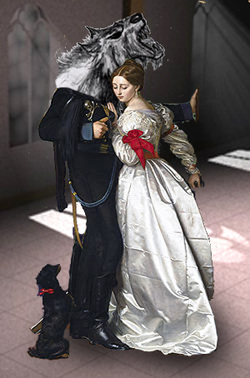
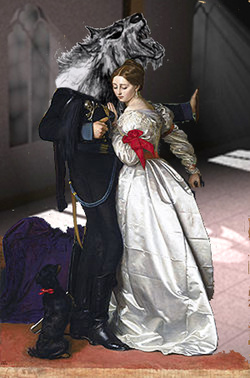
In the meantime, however, YOU are in for a T.R.E.A.T. because I am unveiling a POSSIBLE cover for the IMPOSSIBLE book! Are you ready? And excited? Hold on now. It’s coming in stages, but I think you will enjoy the journey.

Step 1. Finding the inspiration:

From I-Google's "Art of the Day," I discovered "The Black Brunswicker" by John Everett Millais

Step 2. Finding a willing artist:

Enter My Quiet Mind Art ~ John Cooke, husband of my sweet friend and colleague, Tiffany Cooke!

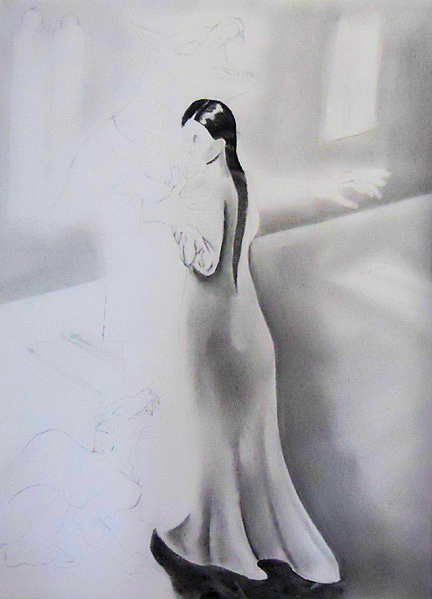
Step 3. John’s initial ideas:

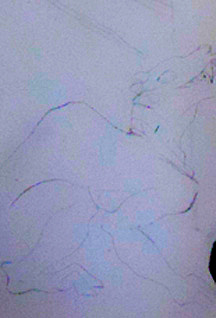
Step 4. John’s experiments:

Good Doggie!


Tess: a wisp of a girl!


Step 5. Almost there:

Rather Gothic, don't you think?

Step 6. The Final Cover by Monsier John Cooke

LET ME KNOW WHAT YOU THINK!


Leave a comment

… chapter IV of TESS of the d’URBERLOUPS: A MashUp Novel …

I read once where fans of Charles Dickens would sit on dock sides waiting for the newest episodes of his latest novel. Published in English newspapers, each chapter had to cross the Atlantic before American readers could learn the fate of David Copperfield or Little Dorsett. So if the 4 or 5 people who follow the d’Urberloupes are tired of waiting at their computers for chapter 4, I apologize. Profusely.

Hardy’s version of this chapter is VERY LONG, and because I love the author’s writing, it is hard for me to delete any of his great descriptions and deep reflections. Consequently, this mash-up version of chapter 4 is even LONGER. As a result, this post is just the first half of the fourth chapter.

Chapter IV

Road to Rolliver's

Rolliver’s inn, the single alehouse at this end of the long and broken village, could only boast of an off-licence; hence, as nobody could legally drink on the premises, the amount of overt accommodation for consumers was strictly limited to a little board about six inches wide and two yards long, fixed to the garden palings by pieces of wire, so as to form a ledge. On this board thirsty strangers deposited their cups as they stood in the road and drank, and threw the dregs on the dusty ground to the pattern of Polynesia, and wished they could have a restful seat inside.

Thus the strangers. But there were also local customers who felt the same wish; and where there’s a will there’s a way.

In a large bedroom upstairs, the window of which was thickly curtained with a great woollen shawl lately discarded by the landlady Mrs Rolliver, were gathered on this evening nearly a dozen persons, all seeking beatitude; all old inhabitants of the nearer end of Marlott, and frequenters of this retreat. Not only did the distance to the The Pure Drop, the fully-licensed tavern at the further part of the dispersed village, render its accommodation practically unavailable for dwellers at this end; but the far more serious question, the quality of the liquor, confirmed the prevalent opinion that it was better to drink with Rolliver in a corner of the housetop than with the other landlord in a wide house.

A gaunt four-post bedstead which stood in the room afforded sitting-space for several persons gathered round three of its sides; a couple more men had elevated themselves on a chest of drawers; another rested on the oak-carved “cwoffer”; two on the wash-stand; another on the stool; and thus all were, somehow, seated at their ease. The stage of mental comfort to which they had arrived at this hour was one wherein their souls expanded beyond their skins, and spread their personalities warmly through the room. In this process the chamber and its furniture grew more and more dignified and luxurious; the shawl hanging at the window took upon itself the richness of tapestry; the brass handles of the chest of drawers were as golden knockers; and the carved bedposts seemed to have some kinship with the magnificent pillars of Solomon’s temple.

Mrs Durbeylou, having quickly walked hitherward after parting from Tess, opened the front door, crossed the downstairs room, which was in deep gloom, and then unfastened the stair-door like one whose fingers knew the tricks of the latches well. Her ascent of the crooked staircase was a slower process, and her face, as it rose into the light above the last stair, encountered the gaze of all the party assembled in the bedroom.

“—-Being a few private friends I’ve asked in to keep up club-walking at my own expense,” the landlady exclaimed at the sound of footsteps, as glibly as a child repeating the Catechism, while she peered over the stairs. “Oh, ’tis you, Mrs Durbeylou–Lard–how you frightened me!–I thought it might be some gaffer sent by Gover’ment.”

Mrs Durbeylou was welcomed with glances and nods by the remainder of the conclave, and turned to where her husband sat. He was humming absently to himself, in a low tone: “I be as good as some folks here and there! I’ve got a great family vault near t’Kingsbere- sub-Greenhill, and finer skillentons than any man er wolf in Wessex! Heh, heh, heh.”

“I’ve something to tell ‘ee that’s come into my head about that–a grand projick!” whispered his cheerful wife. “Here, John, don’t ‘ee see me?” She nudged him, while he, looking through her as through a window-pane, went on with his recitative.

“Hush! Don’t ‘ee sing so loud, my good man,” said the landlady; “in case any member of the Gover’ment should be passing, and take away my licends.”

“He’s told ‘ee what’s happened to us, I suppose?” asked Mrs Durbeylou.

“Yes–in a way. D’ye think there’s any money hanging by it?”

“Ah, that’s the secret,” said Joan Durbeylou sagely. “However, ’tis well to be kin to a coach, even if you don’t ride in ‘en.” She dropped her public voice, and continued in a low tone to her husband: “I’ve been thinking since you brought the news that there’s a great rich lady out by Trantridge, on the edge o’ The Chase, of the name of d’Urberloupes.”

“Hey–what’s that?” said Sir John.

She repeated the information. “That lady must be our relation,” she said. “And my projick is to send Tess to claim kin.”

“There is a lady of the name, now you mention it,” said Durbeylou. “Pa’son Tringham didn’t think of that. But she’s nothing beside we–a junior branch of us, no doubt, hailing long since King Norman’s day.”

While this question was being discussed neither of the pair noticed, in their preoccupation, that little Abraham had crept into the room, and was awaiting an opportunity of asking them to return.

“She is rich, and she’d be sure to take notice o’ the maid,” continued Mrs Durbeylou; “and ’twill be a very good thing. I don’t see why two branches o’ one family should not be on visiting terms.”

“Yes; and we’ll all claim kin!” said Abraham brightly from under the bedstead. “And we’ll all go and see her when Tess has gone to live with her; and we’ll ride in her coach and wear black clothes!”

“How do you come here, child? What nonsense be ye talking! Go away, and play on the stairs till father and mother be ready! … Well, Tess ought to go to this other member of our family. She’d be sure to win the lady–Tess would; and likely enough ‘twould lead to some noble gentleman marrying her. In short, I know it.”

“How?”

“I tried her fate in the Fortune-Teller, and it brought out that very thing! … You should ha’ seen how pretty she looked today; her skin is as sumple as a duchess’s.”

“What says the maid herself to going?”

“I’ve not asked her. She don’t know there is any such lady-relation yet. But it would certainly put her in the way of a grand marriage, and she won’t say nay to going.”

“Tess is queer.”

“But she’s tractable at bottom. Leave her to me.”

Though this conversation had been private, sufficient of its import reached the understandings of those around to suggest to them that the Durbeylous had weightier concerns to talk of now than common folks had, and that Tess, their pretty eldest daughter, had fine prospects, if not a lamentable purpose in store.

“Tess is a fine figure o’ fun, as I said to myself today when I zeed her vamping round parish with the rest,” observed one of the elderly boozers in an undertone. “But Joan Durbeylou must mind that she don’t get green malt in floor.” It was a local phrase which had a peculiar warning for the light-minded mother to guard her daughter’s maidenhood against those who would rob Tess of that which is most valued.

The conversation became inclusive, and presently other footsteps were heard crossing the room below.

“—-Being a few private friends asked in tonight to keep up club-walking at my own expense.” The landlady had rapidly re-used the formula she kept on hand for intruders before she recognized that the newcomer was Tess.

Even to her mother’s gaze the girl’s young features looked sadly out of place amid the alcoholic vapours which floated here as no unsuitable medium for wrinkled middle-age; and hardly was a reproachful flash from Tess’s dark eyes needed to make her father and mother rise from their seats, hastily finish their ale, and descend the stairs behind her, Mrs Rolliver’s caution following their footsteps.

“No noise, please, if ye’ll be so good, my dears; or I mid lose my licends, and be summons’d, and I don’t know what all! ‘Night t’ye!”

They went home together, Tess holding one arm of her father, and Mrs Durbeylou the other. He had, in truth, drunk very little–not a fourth of the quantity which a systematic tippler could carry to church on a Sunday afternoon without a hitch in his eastings of genuflections; but the weakness and  aches growing in his limbs made mountains of Sir John’s petty sins in this kind. On reaching the fresh air he peered up at the lunar lozenge glowing down upon the staggering trio. The father’s distorted gaze noted the shine radiated from a moon not yet full.

His gait was sufficiently unsteady to incline the row of three at one moment as if they were marching to London, and at another as if they were marching to Bath–which produced a comical effect, frequent enough in families on nocturnal homegoings; and, like most comical effects, not quite so comic after all. The two women valiantly disguised these forced excursions and countermarches as well as they could from Durbeylou their cause, and from Abraham, and from themselves; and so they approached by degrees their own door, the head of the family bursting suddenly into his former refrain as he drew near, as if to fortify his soul at sight of the smallness of his present residence–

“I’ve got a fam–ily vault near t’Kingsbere! My name is as good a one as any there is in this county.

“Hush–don’t be so silly, Jacky,” said his wife. “Yours is not the only family that was of ‘count in wold days. Look at the Anktells, and Horseys, and the Tringhams themselves–gone to seed a’most as much as you–though you was bigger folks then they, that’s true. And tangled more with lupine lore any o’them as well. Thank God, I was never of no family that laid claim to any riches or fine skillentons that best lay buried. I have nothing to be ashamed of in that way!”

“Don’t you be so sure o’ that. From you nater ’tis my belief you’ve disgraced yourselves more than any o’ us, and was kings and queens outright at one time.”

Tess turned the subject by saying what was far more prominent in her own mind at the moment than thoughts of her ancestry–“I am afraid father won’t be able to take the journey with the beehives tomorrow so early.”

“I? I shall be all right in an hour or two,” said Durbeylou.

It was eleven o’clock before the family were all in bed, and two o’clock next morning was the latest hour for starting with the beehives if they were to be delivered to the retailers in Casterbridge before the Saturday market began, the way thither lying by bad roads over a distance of between twenty and thirty miles, and the horse and waggon being of the slowest. At half-past one Mrs Durbeyfield came into the large bedroom where Tess and all her little brothers and sisters slept.

“The poor man can’t go,” she said to her eldest daughter, whose great eyes had opened the moment her mother’s hand touched the door.

Tess sat up in bed, lost in a vague interspace between a dream and this information.

“But somebody must go,” she replied. “It is late for the hives already. Swarming will soon be over for the year; and it we put off taking ’em till next week’s market the call for ’em will be past, and they’ll be thrown on our hands.”

Mrs Durbeylou looked unequal to the emergency. “Some young feller, perhaps, would go? One of them who were so much after dancing with ‘ee yesterday,” she presently suggested.

“O no–I wouldn’t have it for the world!” declared Tess proudly. “And letting everybody know the reason–such a thing to be ashamed of! I think I could go if Abraham could go with me to kip me company.”

Her mother at length agreed to this arrangement. Little Abraham was aroused from his deep sleep in a corner of the same apartment, and made to put on his clothes while still mentally in the other world. Meanwhile Tess had hastily dressed herself; and the twain, lighting a lantern, went out to the stable. The rickety little waggon was already laden, and the girl led out the horse Prince, only a degree less rickety than the vehicle.

The poor creature looked wonderingly round at the night, at the lantern, at their two figures, as if he could not believe that at that hour, when every living thing was intended to be in shelter and at rest, he was called upon to go out and labour. They put a stock of candle-ends into the lantern, hung the latter to the off-side of the load, and directed the horse onward, walking at his shoulder at first during the uphill parts of the way, in order not to overload an animal of so little vigour. To cheer themselves as well as they could, they made an artificial morning with the company of the setting moon, the lantern, some bread and butter, and their own conversation, the real morning being far from come. Abraham, as he more fully awoke (for he had moved in a sort of trance so far), began to talk of the strange shapes assumed by the various dark objects against the sky; of this tree that looked like a raging wolf springing from a lair; of that branch which resembled lengthening fangs.